I. Ancient Roots, Persian Present
Jews have lived in Iran since antiquity — the biblical books of Ezra, Nehemiah, and Esther embed them in the Persian imperial world. Over centuries, Iranian Jews adopted Persian as their daily language while maintaining Hebrew for liturgy and law. Judeo-Persian denotes Persian written in Hebrew characters (and spoken varieties marked by Hebrew-Aramaic religious vocabulary), distinct from the Judeo-Arabic of neighboring Iraq.
II. Biblical Translation in Persian
One of Judeo-Persian's greatest monuments is the verse-by-verse Persian translation of the Torah attributed to the fourteenth-century scholar Jacob ben Joseph Tawus (Ya'qūb Tavūs), followed by later translators and commentators. These works allowed Persian-speaking Jews to study Scripture in a language they fully understood while the synagogue reader chanted from the unpointed Hebrew scroll. The pattern mirrors Saadia's Judeo-Arabic Tafsīr — vernacular exegesis serving a Masoretic Hebrew core.
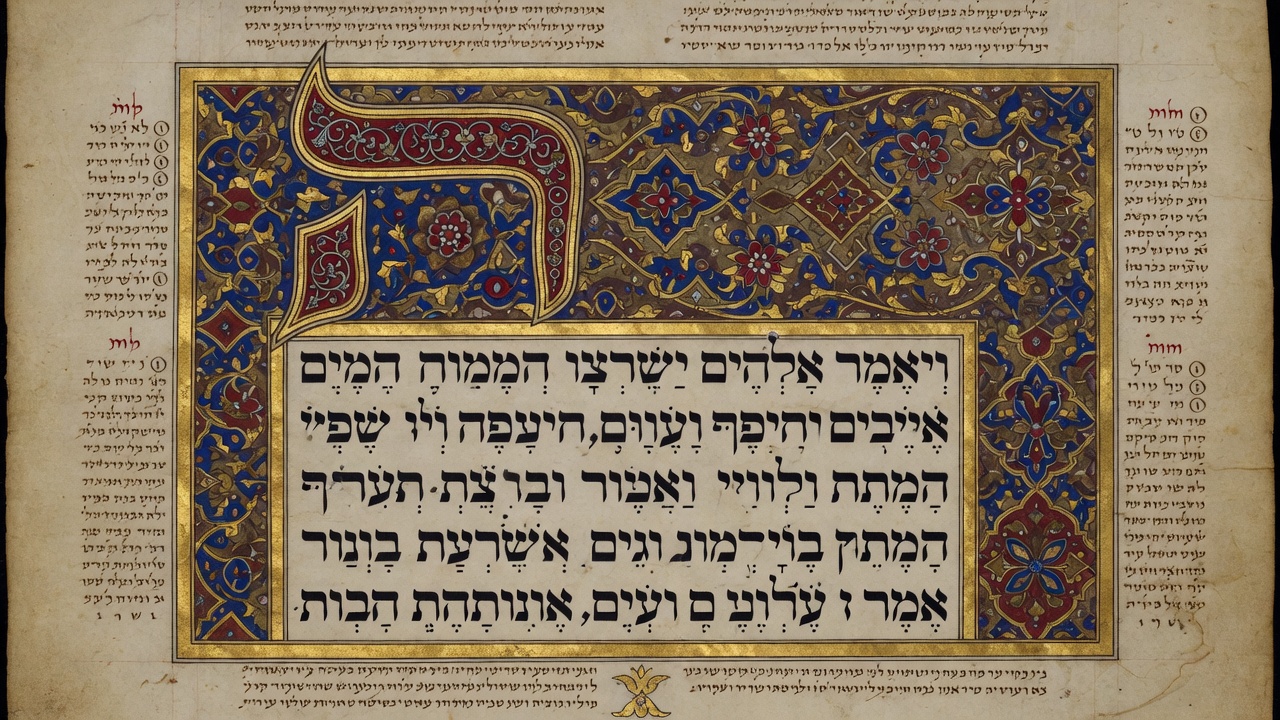
Manuscripts of Judeo-Persian Pentateuchs, Esther scrolls with Persian rubrics, and liturgical poems (piyyutim) with Persian refrains survive in collections worldwide, documenting a literary culture that flourished under Safavid and Qajar rule.
III. Communities and Dialects
Iranian Jewish speech varied by city and mountain enclave:
- Isfahani Jews — one of the largest and most culturally productive communities
- Shirazi and Yazdi Jews — distinct local pronunciations and folklore
- Mountain Jews of Dagestan and Azerbaijan — related communities speaking Judeo-Tat (Caucasian Persian/Juhuri), a sister Jewish language of the Iranian sphere
- Bukharan Jews — Judeo-Persian traditions in Central Asia, overlapping with Tajik Persian
Vera Moreen and other scholars have edited and translated Judeo-Persian texts for modern readers, opening a corpus long accessible only to manuscript specialists.
IV. Twentieth Century and Emigration
The Pahlavi era (1925–1979) accelerated Persianization; Jewish schools taught standard Persian, though homes retained Judeo-Persian features. After the 1979 Islamic Revolution, most Iranian Jews emigrated to Israel, Los Angeles, and New York. Today Judeo-Persian is endangered as a daily vernacular, but Hebrew liturgy — taught with the same pointed Masoretic books used across the diaspora — remains central. Second-generation immigrants record oral histories, publish Judeo-Persian literature, and maintain synagogues where Persian melodies accompany Hebrew prayer.
V. Judeo-Persian and the Masoretic Tradition
Iranian Jews never developed an independent vocalization tradition to rival Tiberias; they relied on imported pointed codices and local oral chant traditions. Their contribution to the Masoretic story is instead on the hermeneutic side: Persian translations and commentaries that interpret the fixed Hebrew consonantal text. In that sense Judeo-Persian exemplifies how the Masoretic Text became a global standard — one Hebrew graph, many vernacular mirrors.