I. Definition and Distinctiveness
Judeo-Arabic refers to the varieties of Arabic spoken and written by Jews, typically in Hebrew characters, with a substantial lexicon of Hebrew and Aramaic religious terms. It is not a single language but a sprachbund of regional dialects — Iraqi, Syrian, Egyptian, Maghrebi, Yemenite — united by script, diglossia with Hebrew, and shared institutions (synagogue, rabbinic court, communal school). Scholars classify written Judeo-Arabic into layers: Classical Judeo-Arabic (the polished prose of Saadia Gaon and Maimonides) and Later Judeo-Arabic (closer to spoken dialects, used in letters and popular literature).
II. Saadia and the Tafsir Tradition
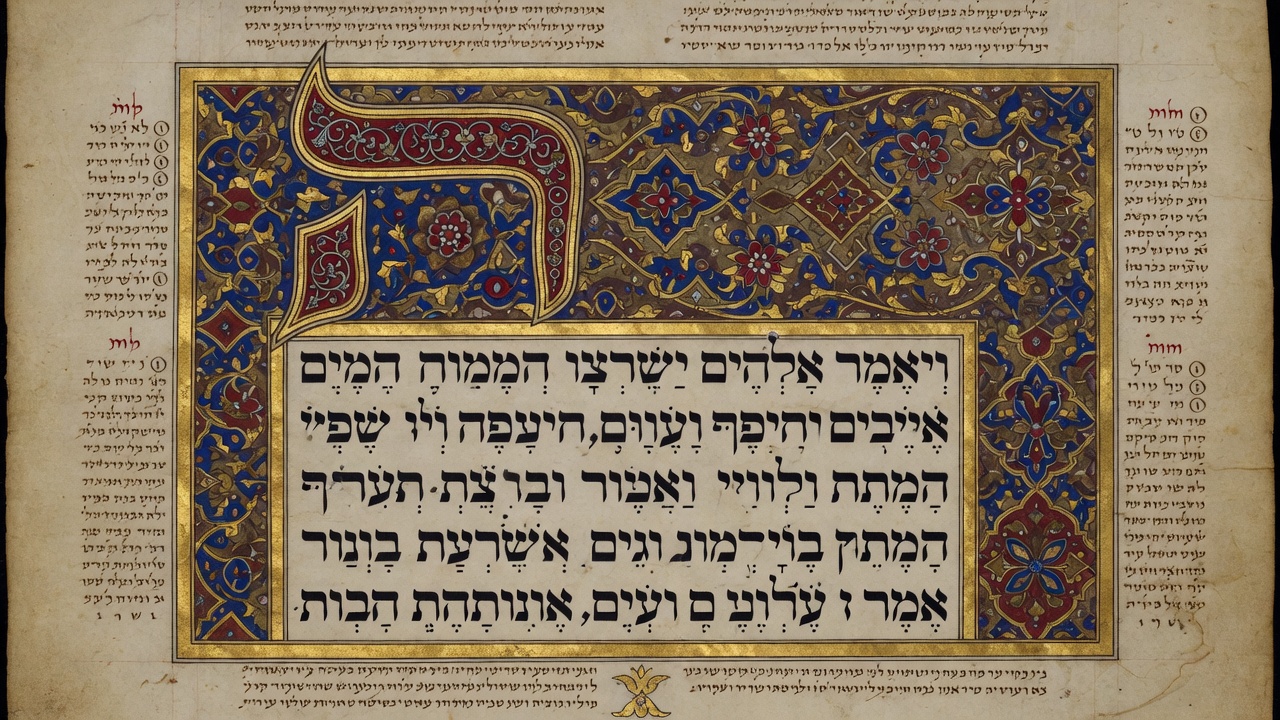
Saadia ben Joseph al-Fayyūmī (882–942), Gaon of Sura, transformed Judeo-Arabic from a spoken convenience into a scholarly medium. His Arabic translation and commentary of the Torah — the Tafsīr — rendered each Hebrew verse into clear rabbinic Arabic while defending the Masoretic text against Karaite and Muslim critics. Saadia's Bible sat beside pointed Hebrew codices in synagogue and home: the consonants and vowels on the right, the Judeo-Arabic sharḥ on the left. For centuries, this layout was how most MENA Jews learned what the weekly Torah portion meant.
Maimonides continued the tradition, writing the Mishneh Torah's philosophical preface and the Guide for the Perplexed in Judeo-Arabic — works that assumed readers who knew Hebrew Scripture but thought in Arabic.
III. The Cairo Genizah as Archive
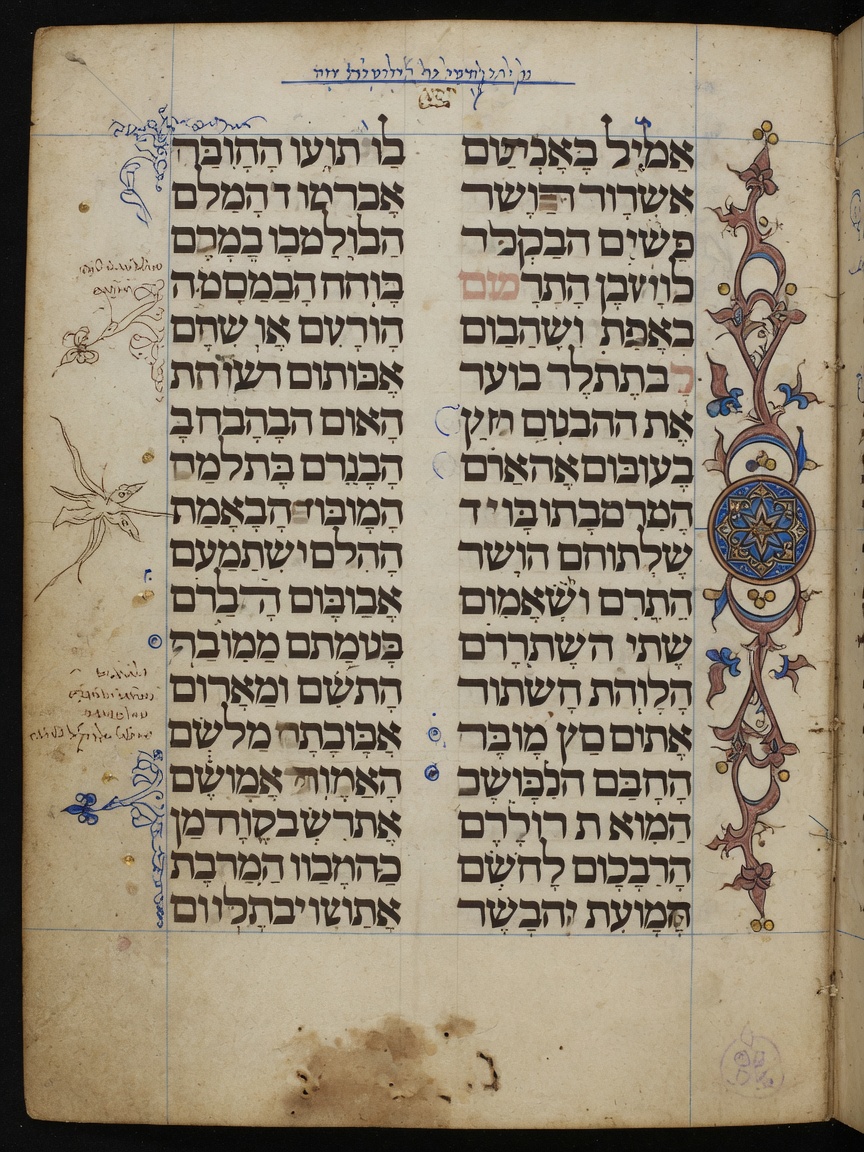
The Cairo Genizah — a storeroom of discarded manuscripts in the Ben Ezra Synagogue of Fustat — preserves the richest record of Judeo-Arabic everyday life. S. D. Goitein's five-volume A Mediterranean Society mined these fragments for a portrait of merchants, wives, judges, and schoolchildren writing Judeo-Arabic on every conceivable subject: silk prices, marriage disputes, mystical longings, grammar exercises. Alongside them lie fully vocalized Hebrew Bibles — proof that the Masoretic text and Judeo-Arabic vernacular coexisted in the same households.
IV. Regional Varieties
- Iraqi Judeo-Arabic — the prestige dialect of the Geonic academies; home of Saadia's legacy
- Egyptian Judeo-Arabic — documented richly in the Genizah; later the Arabic of Maimonides' Cairo
- Maghrebi Judeo-Arabic — Morocco, Algeria, Tunisia; influenced by Berber and French colonial contact
- Yemenite Judeo-Arabic — conservative phonology; extraordinary Hebrew reading traditions alongside
- Syrian and Palestinian Judeo-Arabic — bridges between Mashriqi dialects and the old Palestinian Hebrew-aramaic world
Haim Blanc and Shelomo Morag conducted landmark fieldwork on Moroccan and Yemenite varieties before mass emigration erased many native speakers in the late twentieth century.
V. Relationship to Hebrew and the Masoretic Text
Judeo-Arabic did not compete with Hebrew — it served it. Hebrew remained the language of Torah scrolls (unpointed in synagogue), prayer, and halakhic ruling. Judeo-Arabic translated, explained, argued, and narrated. The Masoretes had made Hebrew independently readable through niqqud; Judeo-Arabic made Hebrew comprehensible to Arabic-speaking Jews who no longer understood biblical vocabulary. When that partnership broke down — under colonialism, Zionist Hebrew revival, and emigration — communities that lost Judeo-Arabic often retained Hebrew liturgy but lost access to centuries of commentary written in their mothers' tongue.