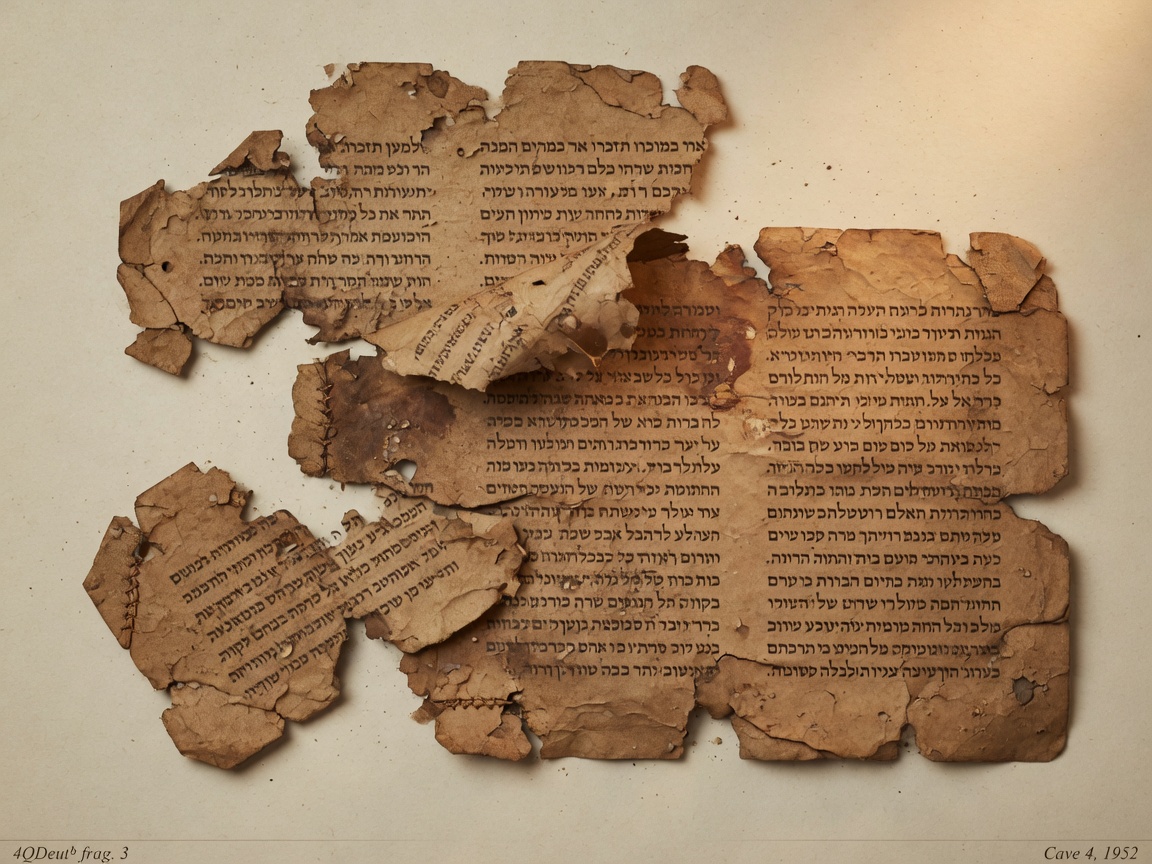
I. A Thousand-Year Gap Closes
Between the Dead Sea Scrolls (mostly 3rd century BCE–1st century CE) and the great Masoretic codices (9th–11th centuries CE) lies a long silence in the Hebrew manuscript record. Qumran therefore provides the earliest large-scale evidence for how the biblical text circulated before the Masoretes added vowels and accents. Frank Moore Cross and Emanuel Tov showed that many Qumran biblical scrolls already align closely with the stream that would become the Masoretic Text — often called the proto-Masoretic tradition.
II. Consonants First, Pointing Later
Textual critics distinguish the consonantal substrate from the Masoretic superstructure of vowels, accents, and notes. Qumran scrolls are unpointed; they testify to consonants and sometimes to spelling freedom that the later Masorah would track and restrict. The Masoretes did not invent the consonantal base; they inherited a relatively stable line of descent and froze it in a form suitable for global Jewish use while layering the pointing on top.
Emanuel Tov's ten-part series on the proto-Masoretic text traces when the consonantal tradition stabilized — a process linked to rabbinic authority and the trauma of the Temple's destruction.
III. Agreement and Disagreement
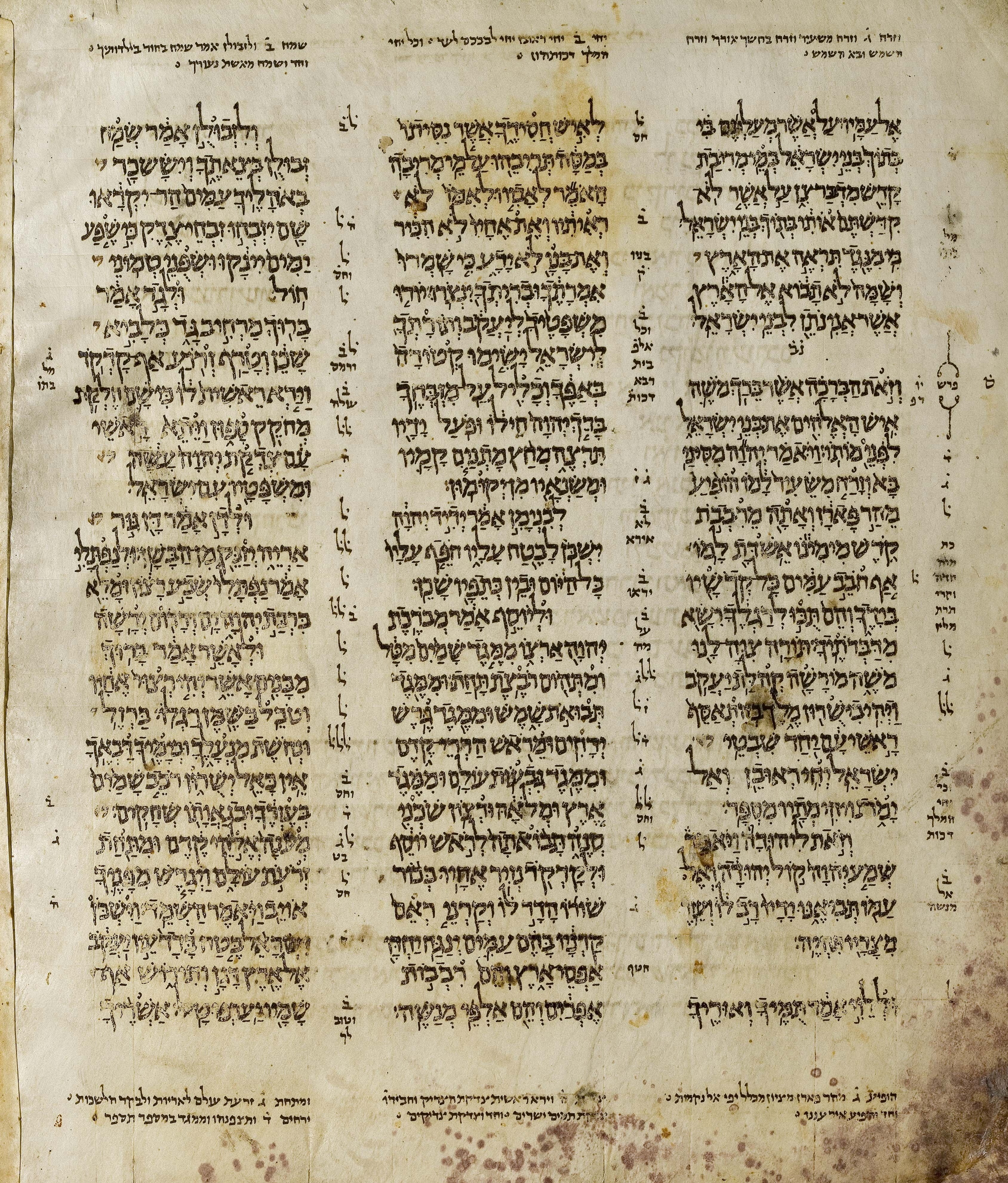
The Great Isaiah Scroll and many other Qumran witnesses match the MT consonants overwhelmingly — astonishing fidelity across a millennium. This supports the view that the Masoretes codified rather than fabricated the lexical tradition.
Notable divergences appear in Jeremiah (shorter MT vs. longer Septuagint form), psalm superscriptions, and occasional spellings. These variants were already circulating; the Masoretes selected one reading for public recitation and documented alternatives in qere/ketiv and Masorah.
IV. Three Witnesses in Conversation
Modern scholarship compares three major witnesses: the MT (via great codices like Leningrad), the Dead Sea Scrolls, and ancient translations (Septuagint, Vulgate, Targumim). The Cairo Genizah adds a fourth layer — medieval fragments showing how pointing traditions actually functioned in daily life.
The MT remains the default for Jewish liturgy and most translations — not because it is provably identical to the "original" text in every verse, but because it is the most carefully documented, statistically verified, and communally authorized form of Scripture in existence.
Critical editions such as BHS mark points of disagreement with sigla in the apparatus — continuing the Masoretic impulse to document variants rather than hide them. For the Leon Levy Dead Sea Scrolls Digital Library, the Groves Center WLC, and other resources, see Masoretic Text Projects & Resources.