I. Why Codices Matter
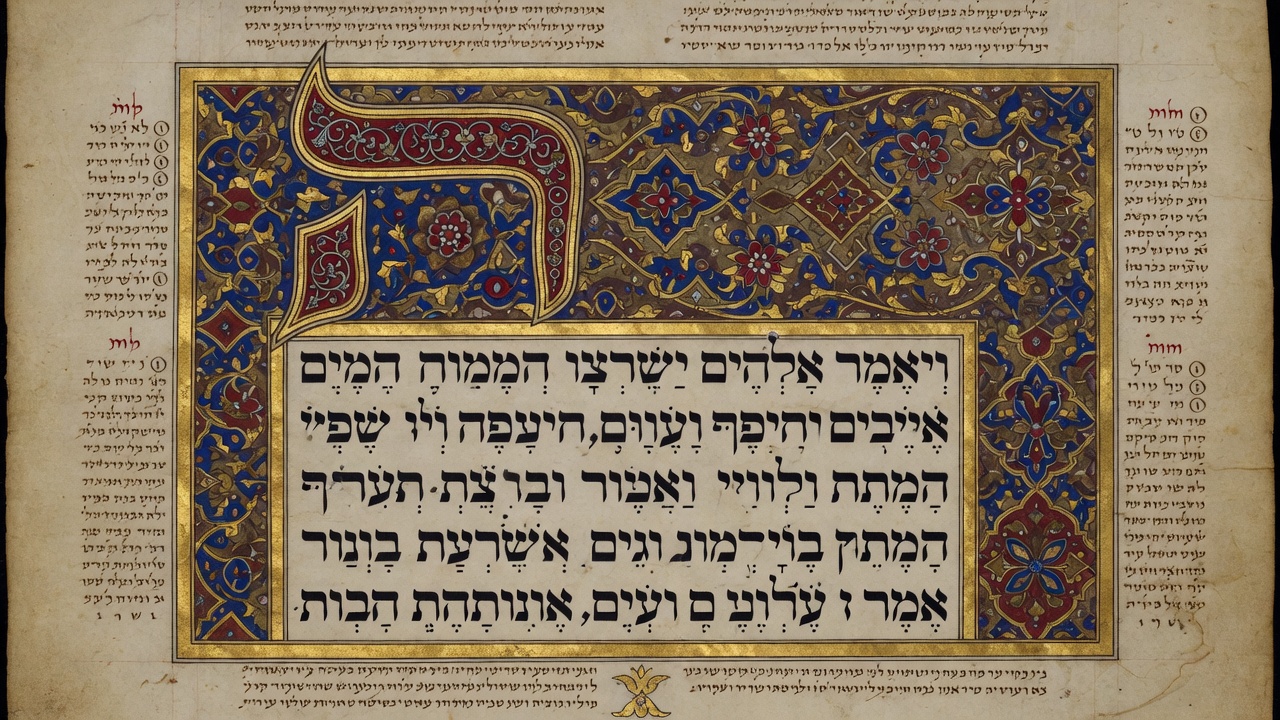
Ritual Torah scrolls remain unpointed, but the Masoretes worked primarily in codices — bound books where vowels, accents, and Masorah could fill the margins. The great codices of the 9th–11th centuries are not interchangeable copies; each is an independent witness in a stemma of transmission. Agreement between Aleppo and Leningrad on a difficult reading lends confidence; disagreement flags scribal error or a genuine variant one school preserved and another did not.
II. The Four Landmarks
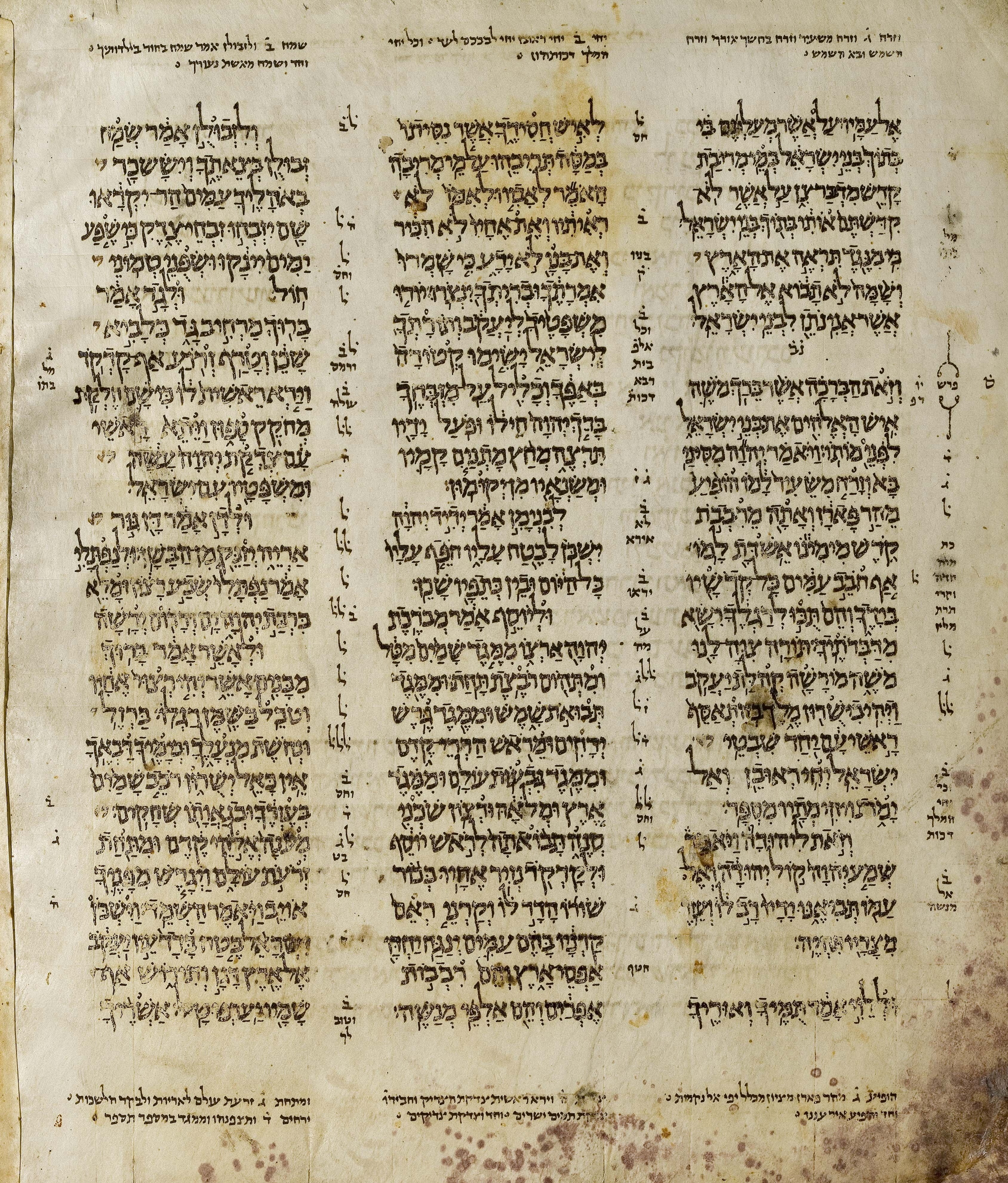
Consonants by Shlomo ben Buya'a; vocalization and Masorah by Aaron ben Moses ben Asher in Tiberias. Kept for centuries in the Great Synagogue of Aleppo; roughly 40% lost in 1947 riots. The surviving 294 leaves are in the Shrine of the Book, Jerusalem. Full note on the Crown of Aleppo →
Written in Cairo by Samuel ben Jacob. The oldest complete Hebrew Bible (491 folios, all 24 books). Base text for BHS and most critical editions. Where Aleppo lacks most of the Torah, Leningrad supplies the full pointed text.
Nearly complete Bible on 792 pages; only ~12 leaves missing. Sold for $38.1 million in 2023; now at the ANU Museum, Tel Aviv. A vital bridge between Qumran witnesses and the standardized medieval text.
Attributed to Moses ben Asher, Aaron's father. Former and Latter Prophets with full pointing. Still kept in the Karaite synagogue in Cairo — a reminder that Karaite patrons treasured the same Masoretic masterpieces as Rabbanites.
III. Prestige vs. Scholarship
Jewish communal memory privileges the Aleppo Codex as the "Crown" (Keter). Academic biblical studies, however, defaults to the Leningrad Codex because it is complete and fully digitized. The Hebrew University Bible Project reconstructs from Aleppo where possible; the Groves Center's machine-readable Leningrad transcription powers Bible software worldwide. Together with Sassoon and the Genizah fragments, they form the evidence base for all modern textual criticism. Browse all Masoretic Text projects →
For the rivalry behind Aleppo's pointing tradition, see Ben Asher vs. Ben Naphtali. For how Qumran manuscripts relate to these codices, see The Dead Sea Scrolls and the Masoretic Text.