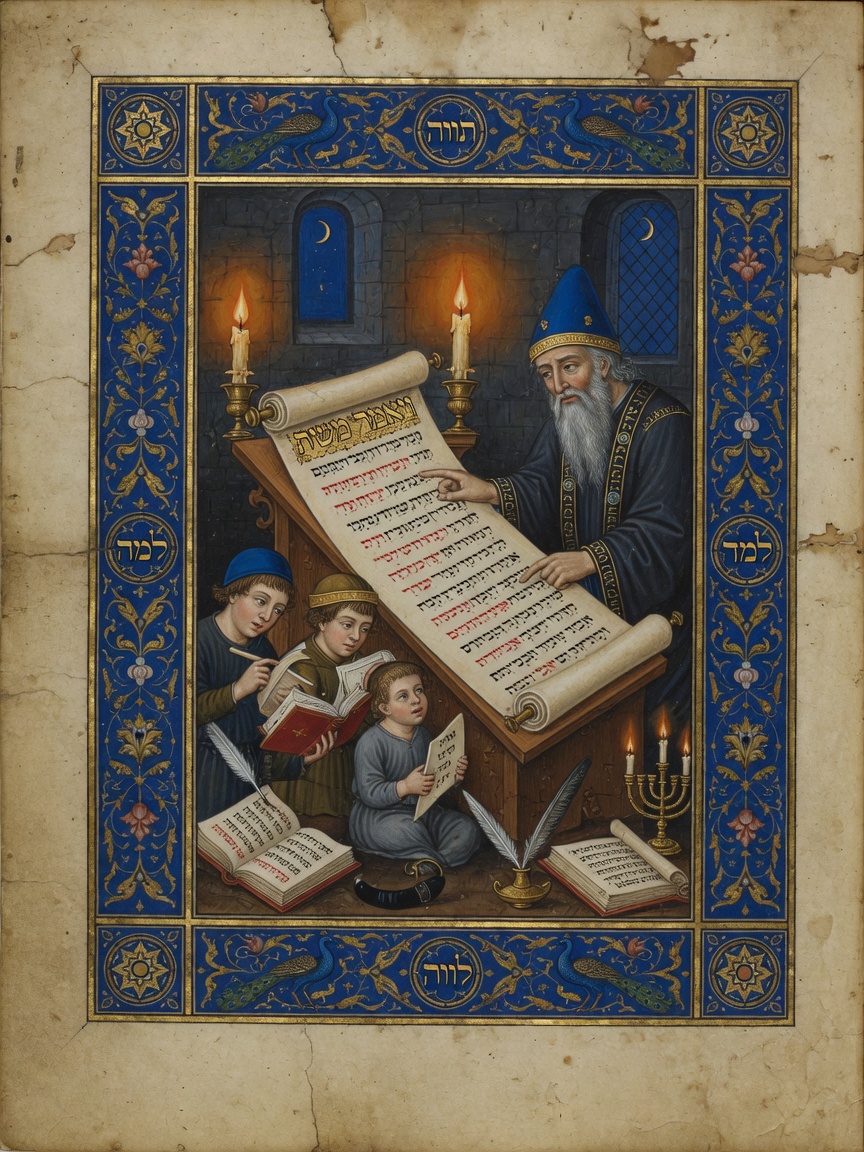
I. Vilna: Torah City of the North
Vilnius (Vilna, Wilno) was the spiritual capital of Lithuanian Jewry — a city whose very nickname, "Jerusalem of Lithuania," proclaimed its identity as a place of Torah. From the seventeenth century, Vilna's yeshivot attracted students from across the Pale of Settlement.
The Vilna Gaon (Elijah ben Solomon Zalman, 1720–1797) revolutionized Jewish study by insisting on grammatical precision in Hebrew and Aramaic — treating the Masoretic Text as a text whose every vowel and accent merited analysis.
II. Print Capital of the Pale
Vilna's Romm publishing house issued editions of the Talmud, Mikraot Gedolot, and pointed Bibles that became standard across Eastern Europe. If Tiberias produced the authoritative codices, Vilna mass-produced them for millions of readers.
III. Destruction and Legacy
Vilna's Jews numbered roughly 60,000 on the eve of World War II. The ghetto and Ponary forest killings destroyed the community. The Vilna Ghetto's secret archive preserved evidence of a civilization centered on Scripture. Today a small community remains; Vilna's legacy lives in yeshivot worldwide that still treat Masoretic precision as the foundation of learning.