I. The Puzzle of Hebrew's Endurance
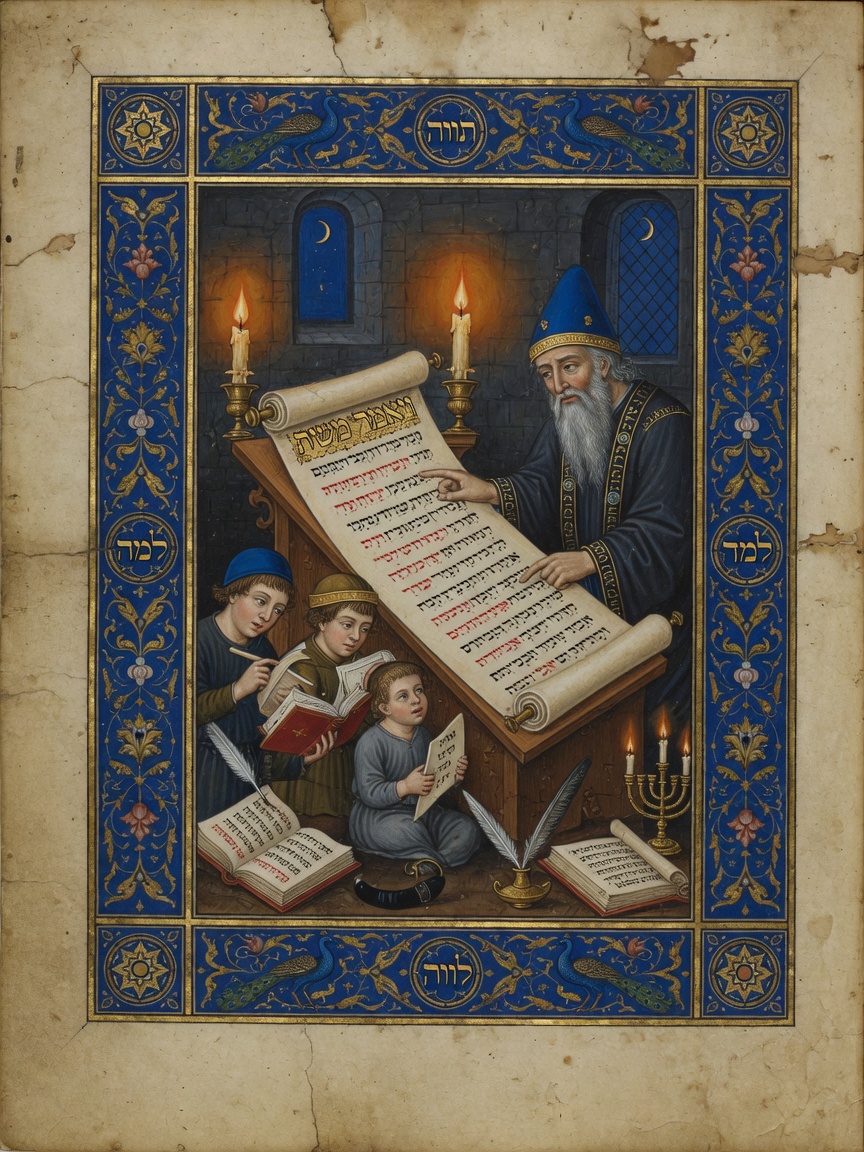
Most ancient languages vanish when their speakers adopt new vernaculars. Akkadian, Ugaritic, and Phoenician left magnificent literatures but no living communities. Hebrew is different: it ceased to be the ordinary spoken language of most Jews for roughly two thousand years, yet never died. It remained the language of the Hebrew Bible, of daily prayer, of rabbinic law, and — after the Masoretes — of a fully readable, singable, teachable sacred text. In the 19th and 20th centuries it was deliberately revived as a modern spoken language in the Land of Israel, an event unique in linguistic history.
II. Biblical and Second Temple Hebrew
Classical biblical Hebrew — the language of the Torah, Prophets, and most Psalms — reflects several chronological layers (archaic poetry, classical prose, late biblical style). By the Persian and Hellenistic periods, Jews in Palestine increasingly spoke Aramaic, yet continued to compose and copy Hebrew Scriptures. The Dead Sea Scrolls show Hebrew still being written at Qumran alongside Aramaic texts; Emanuel Tov and other scholars debate whether Hebrew remained a living spoken language or primarily a literary-religious medium in the first century CE.
What matters for the Masoretic story is institutional: the Temple and synagogue anchored Hebrew in public worship. When the Temple fell in 70 CE, the synagogue — with its weekly Hebrew Torah reading — became the primary engine of Hebrew survival.
III. From Spoken Language to Liturgical Language
By the Geonic period, everyday Jewish speech in the Middle East was Arabic (in Judeo-Arabic form); in Ashkenaz it became Yiddish; in the Mediterranean, Ladino (Judeo-Spanish). Hebrew persisted as:
- Liturgical Hebrew — the Shema, the Amidah, the festival liturgy, all in biblical and rabbinic Hebrew
- Biblical Hebrew — the Masoretic Text read in synagogue with niqqud
- Rabbinic Hebrew — the language of the Mishnah and later responsa, distinct in vocabulary and syntax from biblical Hebrew
- Poetic and epistolary Hebrew — medieval Hebrew poetry in Spain, piyyutim (liturgical poems), and rabbinic correspondence
This is classic diglossia: a high language (Hebrew) for religion and learning, and a low language (Arabic, Yiddish, etc.) for daily life. Hebrew's "survival" in this period meant survival as a learned and sacred tongue, not as the language of the marketplace.
IV. The Masoretic Revolution in Readability
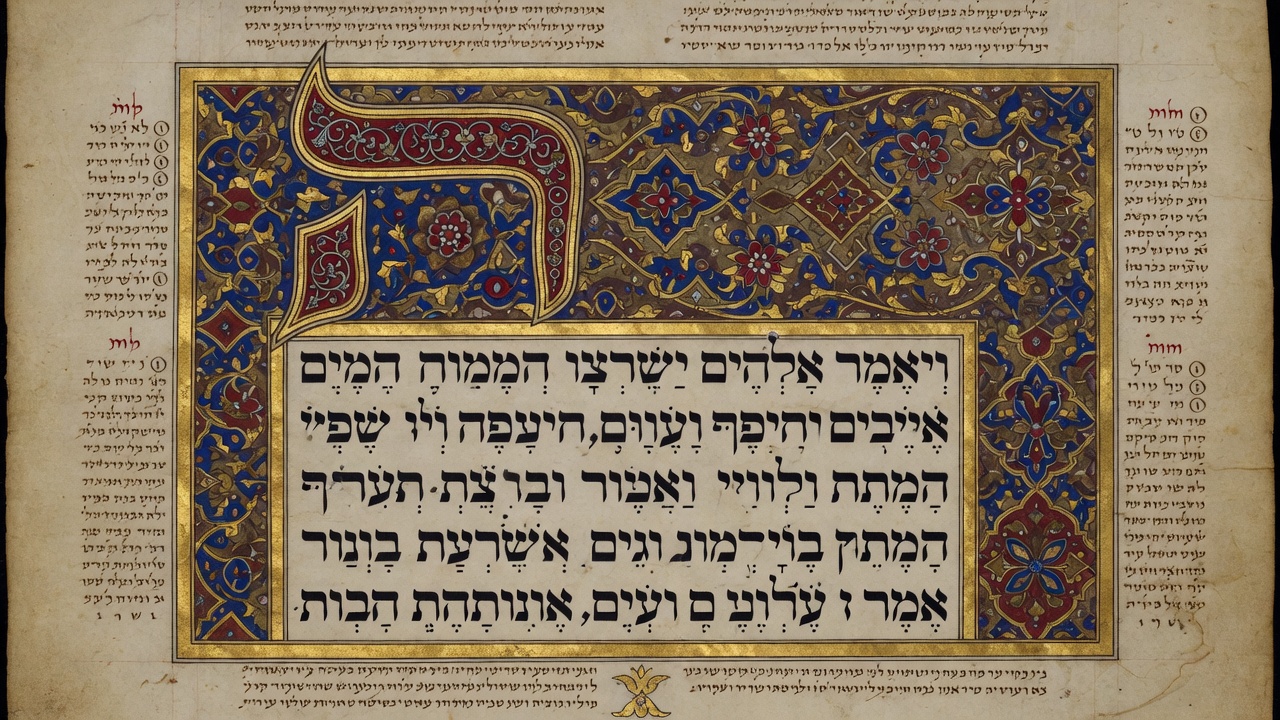
Before the Masoretes, reading biblical Hebrew required oral transmission of how consonants were vocalized. The Tiberian system changed that. By marking every vowel and accent, the Masoretes made Hebrew:
- Teachable to children in the cheder from printed or manuscript humashim
- Chantable by any literate Jew following te'amim
- Analyzable by grammarians (Ibn Janach, Kimhi) who could cite forms with precision
Geoffrey Khan's reconstruction of Tiberian phonology shows how much empirical linguistic knowledge the Masoretes encoded — knowledge that preserved a reading tradition potentially older than the pointing itself.
V. Hebrew in the Diaspora: Education and Print
Every Jewish community maintained some Hebrew literacy. The cheder system in Eastern Europe taught boys to read Hebrew from age three or four. The Mikraot Gedolot and printed prayer books spread a standardized pointed Hebrew across the world. → Teaching Hebrew hub • Poland & Ashkenaz note
In the Arabic-speaking world, Saadia Gaon's Arabic translation of the Torah made Scripture accessible while reinforcing Hebrew as the authoritative original. Judeo-Arabic was written in Hebrew characters — a visual reminder that Hebrew remained the master script of Jewish literacy even when Arabic was the spoken tongue.
VI. Medieval and Early Modern Hebrew Literature
Hebrew never stopped being written. The Golden Age of Spain produced vast Hebrew poetry (Judah Halevi, Ibn Gabirol). The Zohar (13th c.) mixed Hebrew and Aramaic in mystical exegesis. The Haskalah (Jewish Enlightenment) revived Hebrew as a secular literary language in 18th–19th century Europe before the Zionist movement revived it as speech.
VII. The Modern Revival (Ivrit)
Eliezer Ben-Yehuda (1858–1922) and the Zionist settlement in Palestine undertook the deliberate revival of Hebrew as a daily spoken language — coining modern vocabulary, establishing Hebrew schools, and creating a press in Hebrew. Modern Israeli Hebrew (Ivrit) draws on biblical, rabbinic, and medieval strata, filtered through the Masoretic pronunciation tradition preserved in Sephardi and Ashkenazi liturgical reading.
Without the Masoretes' vocalization, the consonantal skeleton of the Bible would have remained accessible only to specialists. Without two millennia of liturgical and educational use, there would have been no community to revive. Hebrew's survival is a joint achievement of synagogue, school, scriptorium, and — decisively — the Masoretic codex.
VIII. What Scholars Debate
- Is modern Ivrit "the same" language as biblical Hebrew?
- What role did the Masoretic text play in Ben-Yehuda's standardization?
- How do Yemenite and other liturgical traditions preserve archaic features?