I. What Taytsh Means
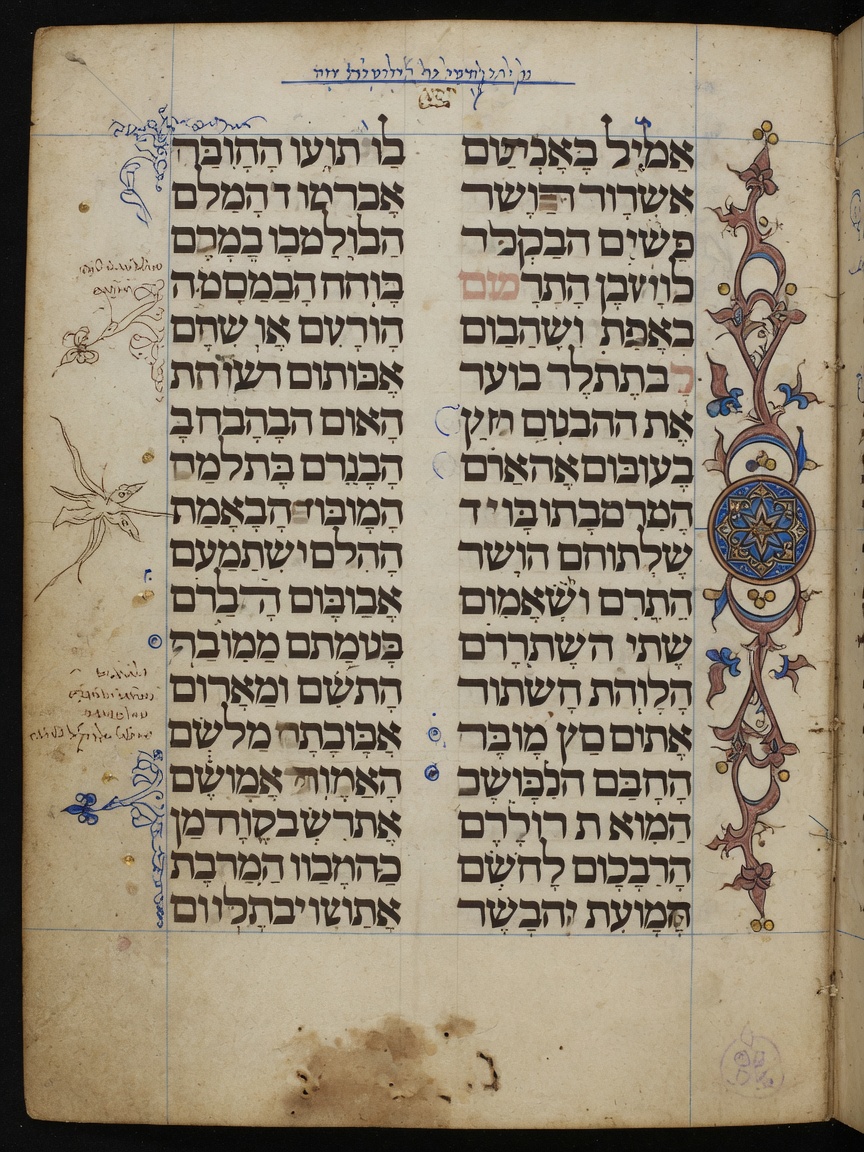
The Yiddish word taytsh (from Hebrew תֵּעוּת, "translation," "explanation") names the Ashkenazi practice of rendering biblical Hebrew into the Jewish vernacular — not as a replacement scroll for synagogue use, but as a companion text for understanding. In a typical taytsh khumesh (Yiddish Pentateuch), the reader finds the pointed Hebrew verse with niqqud and often Rashi, facing or beneath a Yiddish paraphrase that unpacks difficult words and syntax for household readers who had learned to read Hebrew in cheder but thought primarily in Yiddish.
This mirrors the Judeo-Arabic sharḥ tradition of the Islamic world and the Ladino Me'am Lo'ez — a diaspora-wide pattern: the Masoretic Hebrew graph stays fixed; the vernacular explains.
II. Early Yiddish Biblical Texts
Yiddish biblical literature begins in manuscript and early print:
- Old Yiddish epic paraphrases — Rhymed retellings of biblical narratives (Creation, Joseph, David) for audiences who knew the stories from synagogue but wanted entertainment in Yiddish
- Ze'enah u-Re'enah (Tsenerene, c. 1590s) — The most beloved Yiddish homiletical Bible for women and family reading; weaves midrash, ethics, and narrative into weekly portions. Reprinted hundreds of times across centuries
- Printed taytsh khumashim — From the seventeenth century onward, printers in Amsterdam, Prague, and Poland issued Hebrew-Yiddish diglot Bibles for mass sale
The Tsenerene assumed readers who heard the Hebrew Torah chanted in shul each week — its Yiddish was commentary and elaboration, not a competing scripture.
III. Tsenbeṭlakh and the Weekly Portion
From the nineteenth century, cheap printed tsenbeṭlakh (little leaflets, "ten-pagers") flooded Eastern Europe — one sheet per weekly parashah, summarizing the Hebrew portion in Yiddish with peshat, midrash, and moral application. Hasidic courts printed their rebbes' Yiddish discourses on the Torah; Mitnagdic yeshivot circulated Hebrew exegesis that students discussed in Yiddish. The tsenbeṭl was the democratization of biblical knowledge — Masoretic literacy plus vernacular explanation, delivered to every household for kopecks.
IV. Print, Mikraot Gedolot, and the Haskalah
Hebrew printing revolutionized Ashkenazi Bible study before Yiddish translations peaked. The Mikraot Gedolot ("Rabbinic Bible") placed the pointed Masoretic Text alongside classical commentaries — Rashi, Ibn Ezra, Nachmanides. Advanced students read Hebrew; the masses read Yiddish taytsh beside the same pointed consonants. The Haskalah later promoted modern Yiddish and Hebrew Bible translations (including Czernowitz 1908 conference debates on Yiddish as a national language), but never displaced the synagogue's unpointed Torah scroll — the ultimate Masoretic artifact, read only in Hebrew.
V. Modern Yiddish Bibles
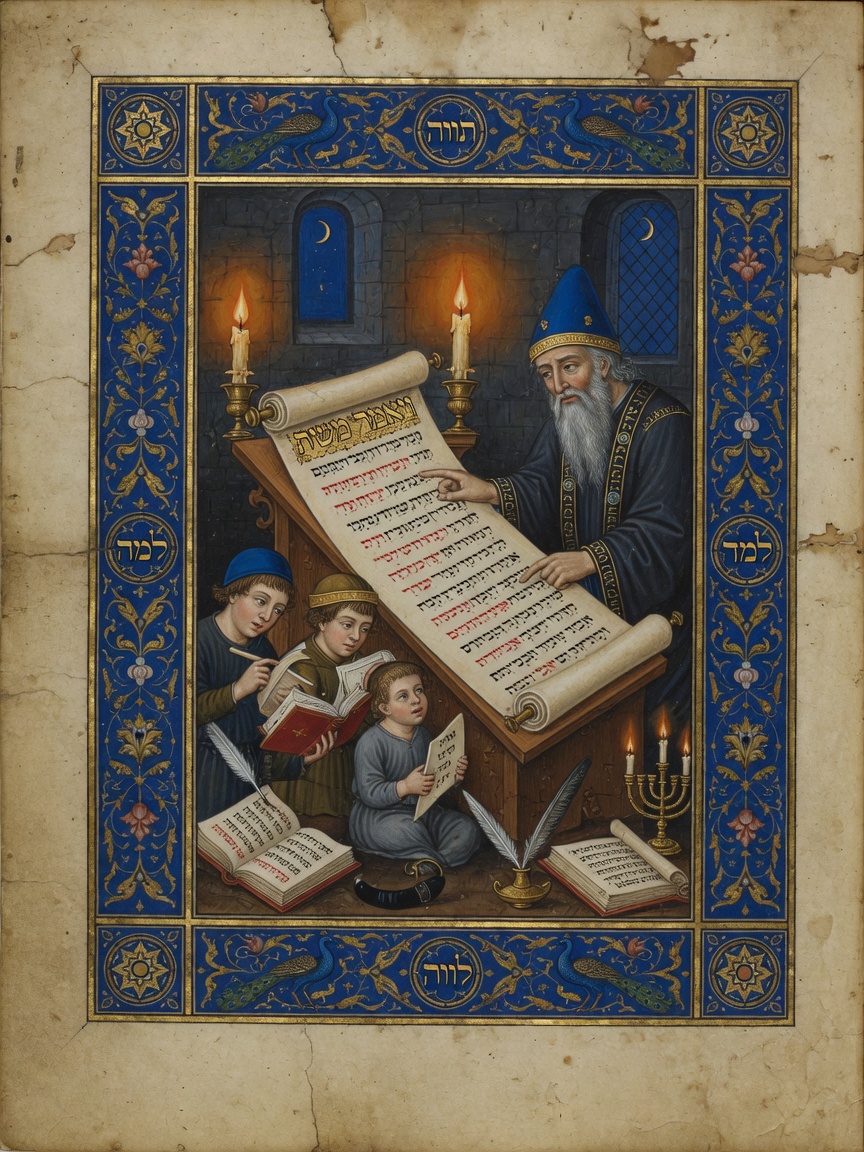
Twentieth-century projects — including translations by Yehoash (Solomon Blumgarten) — produced full Yiddish Bibles for secular and religious readers. Yehoash's translation (completed 1927) aimed at literary dignity while tracking the Hebrew closely. Today, Hasidic communities publish Yiddish commentaries alongside pointed Hebrew; academic publishers issue bilingual editions for classrooms. In every case, the Hebrew Masoretic consonantal text remains the authority; Yiddish is the bridge.