I. Two Languages, One Community
Linguists call it diglossia: two languages coexisting in one society with distinct roles. In Ashkenaz, loshn koydesh ("the holy tongue" — Hebrew and Aramaic as a single religious register) governed synagogue, Talmud study, rabbinic law, and the pointed Masoretic Bible. Yiddish governed the kitchen, market, theater, popular literature, and the magid's Shabbat sermon explaining the Torah portion. Neither was optional for a fully socialized Jew; mastery of both — in different domains — was normal.
Crucially, Hebrew was not a foreign language to Yiddish speakers. It was the language of their prayers, their most prestigious books, and roughly 15–20% of Yiddish vocabulary. When a Yid said shabbes, mitzvah, or tsedoke, he was code-switching inside a single linguistic ecosystem, not jumping between unrelated tongues.
II. The Masoretic Text as Diglossic Anchor
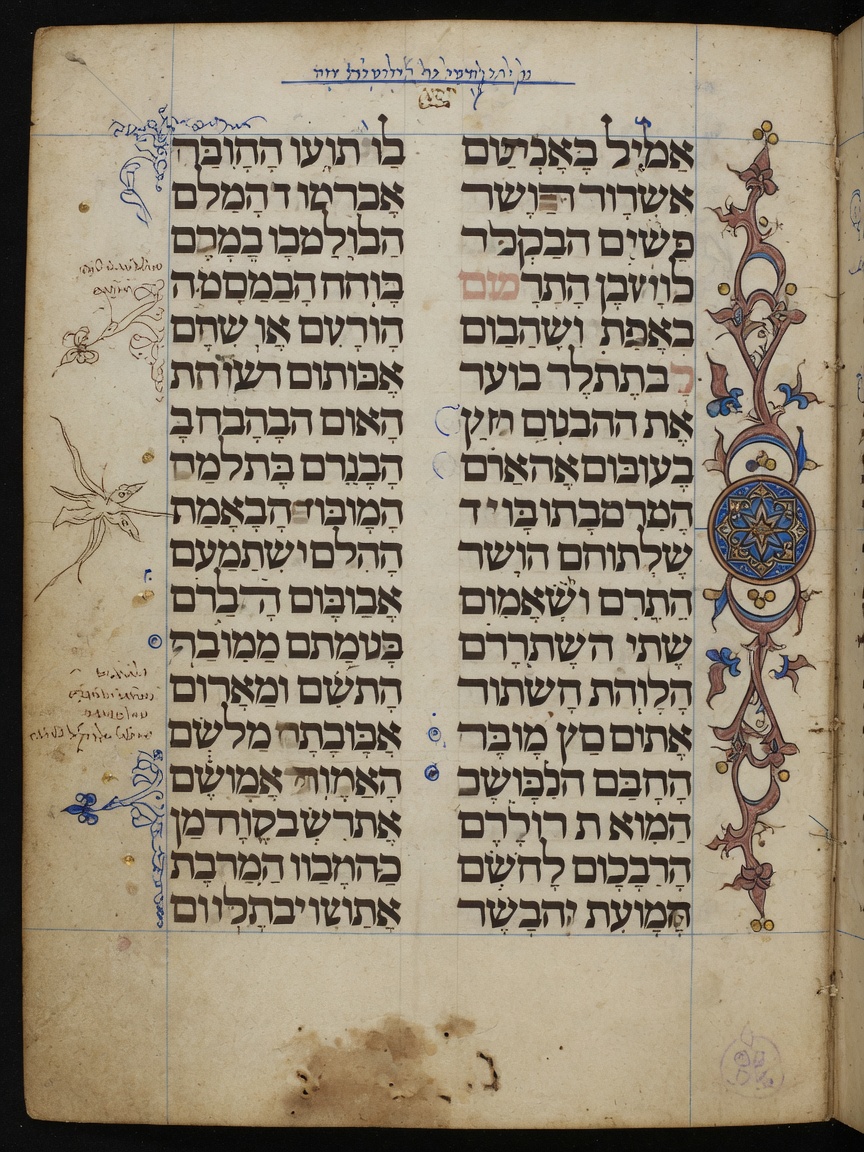
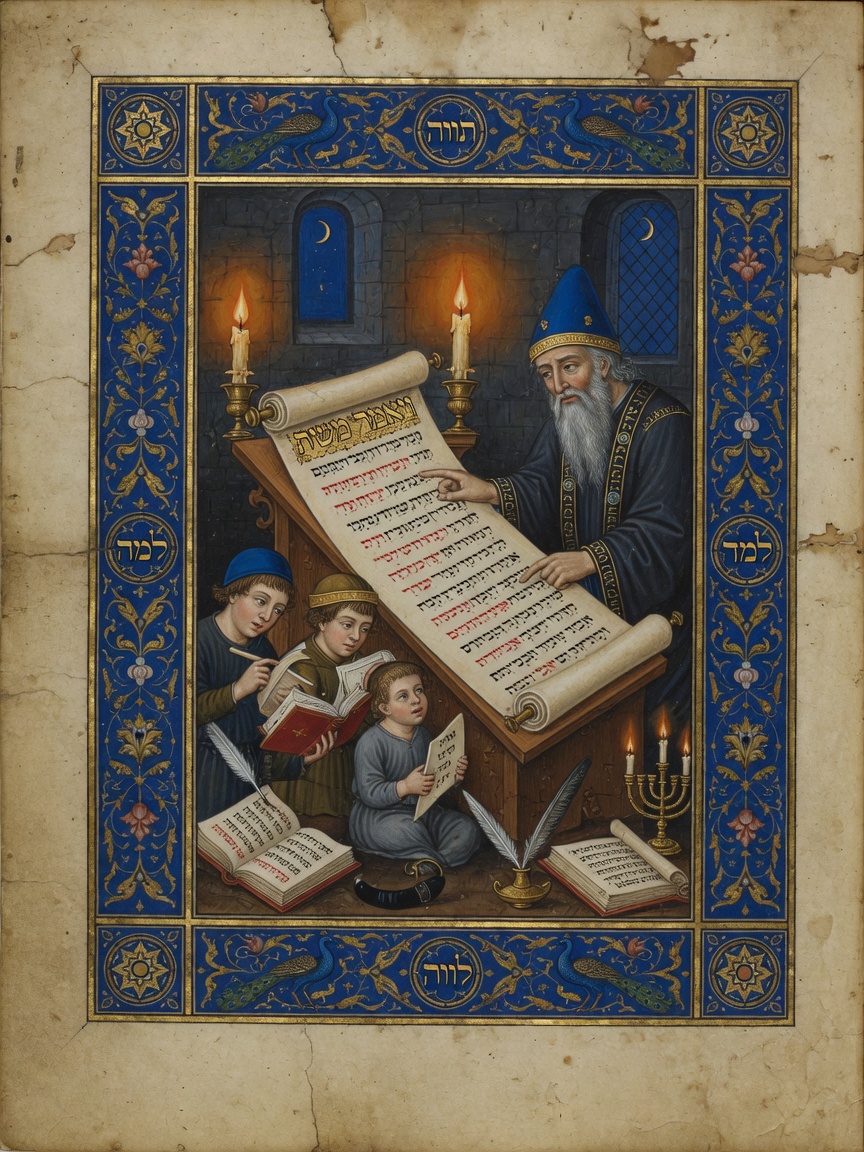
The Masoretes made diglossia stable. By inscribing vowels and cantillation onto the Hebrew consonantal text, they allowed Yiddish-speaking children to learn correct biblical pronunciation from a book — without requiring a living Hebrew-speaking community. The cheder taught:
- Hebrew letters and niqqud — decoding the pointed text
- Te'amim — chanting Torah with Masoretic accuracy
- Rashi — first layer of meaning, often glossed orally in Yiddish by the teacher
Yiddish was the language of explanation; Hebrew with Masoretic pointing was the language of authority. That hierarchy never inverted in traditional Ashkenaz — not even when Yiddish literature achieved global fame.
III. Who Spoke What, and Where
Hebrew-Aramaic for Talmud, responsa, contracts, and liturgy; Yiddish for commerce, politics, and oral Torah exposition
Yiddish for daily life, tkhines, letters, and the Tsenerene Bible; variable Hebrew literacy depending on region and class — higher than older stereotypes admitted, per Turniansky's research
Hebrew prayer and Torah reading; Yiddish sermon (derashah) bridging the Hebrew leyning and the congregation's comprehension
IV. Rashi as Proto-Diglossia
Long before Yiddish matured, Rashi (1040–1105) wrote Talmud and Bible commentaries in Hebrew script peppered with Old French (la'az) glosses — the same structural move as Yiddish taytsh: sacred Hebrew line, vernacular word in the margin. Rashi's French is not Yiddish, but the pedagogy is identical. Ashkenazi Jews inherited a centuries-old habit of never letting Hebrew stand unexplained.
V. Haskalah and the Diglossia Debate
The Haskalah (Jewish Enlightenment) challenged diglossia. Maskilim wanted Jews to speak European vernaculars (German, Russian, Polish) and a purified biblical Hebrew — demoting Yiddish as embarrassing zhargon. Yiddishists countered that Yiddish was the authentic folk voice and deserved dignity. Zionists promoted Hebrew revival (Ivrit) as a spoken language in Palestine. Each movement attacked the old balance differently, but all assumed the Masoretic Text as the shared biblical standard — the one text no faction proposed abandoning.