I. Royal Capital and Jewish Metropolis
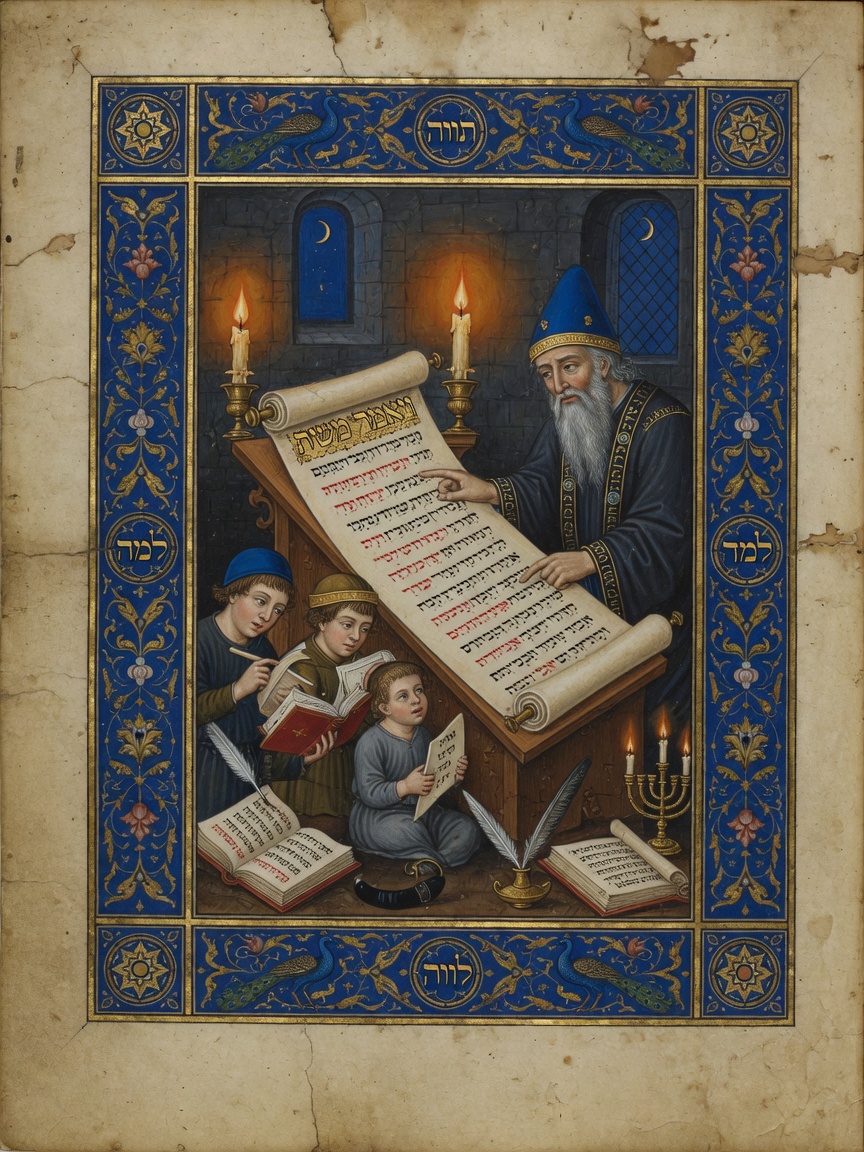
Jewish settlement in Warsaw expanded after the expulsion of Jews from Warsaw in 1527 was lifted in the eighteenth century. By the nineteenth century Warsaw was the largest Jewish city in Europe — and arguably in the world — a metropolis of Yiddish newspapers, rabbinic seminaries, and synagogue networks where every Shabbat the same Torah portions were chanted from unpointed scrolls corrected against pointed Masoretic Text codices.
Warsaw sat at the heart of the Pale of Settlement's western edge under Russian rule. Its Jews spoke Polish-inflected Yiddish (Poylish dialect), studied in cheders and yeshivot, and read the Bible through Rashi's commentary and the Mikraot Gedolot tradition.
II. Print, Scholarship, and Sacred Books
Warsaw became a capital of Hebrew and Yiddish print. Romm editions of the Talmud and humashim with full Tiberian vocalization spread Masoretic literacy across the Pale. Maskilim published biblical commentaries; Hasidic rebbes issued teachings saturated with scriptural allusion; Yiddish writers translated and retold biblical narratives for mass audiences.
The Vilna Gaon's influence reached Warsaw through published grammars and corrected texts — part of the Ashkenazi conviction that the pointed Bible was the empirical foundation of all Torah study.
III. Ghetto, Uprising, and Aftermath
Nazi occupation confined hundreds of thousands of Warsaw Jews to the ghetto (1940–1943). Emanuel Ringelblum's Oyneg Shabes archive preserved documents of a civilization built around Scripture. The Warsaw Ghetto Uprising (April 1943) ended in destruction; the Great Synagogue on Tłomackie Street was blown up on 16 May 1943.
Survivors rebuilt Warsaw Jewish life in Israel, the Americas, and a small post-communist community. The POLIN Museum and annual commemorations keep memory alive — but the city's prewar role as the capital of Ashkenazi Masoretic Text literacy belongs to history.