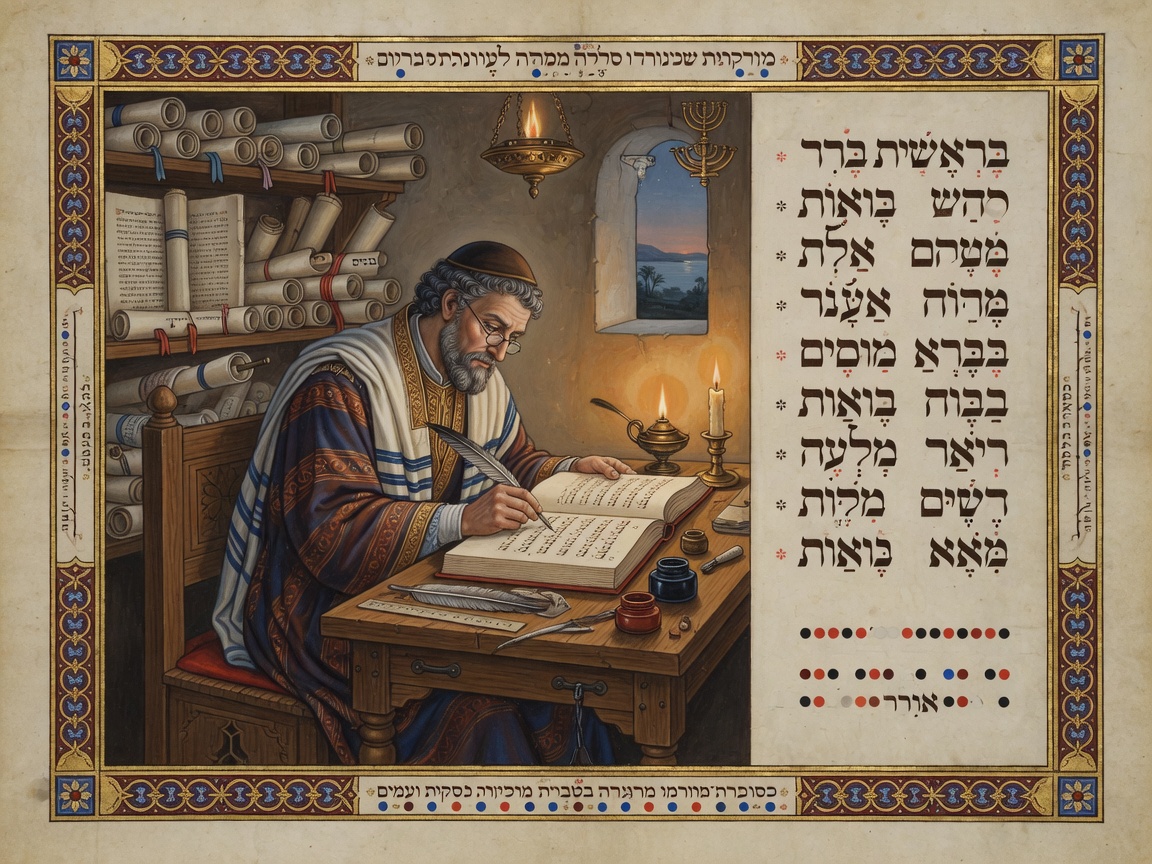
I. Origins and Structure
Yiddish emerged around the tenth century among Jews settling along the Rhine, where they adapted Middle High German into a Jewish ethnolect: Germanic grammar and syntax, a core of Hebrew-Aramaic religious vocabulary (loshn koydesh), and Romance loanwords from earlier Jewish migration. As Ashkenazi communities moved into Slavic lands from the fourteenth century onward, Yiddish absorbed Polish, Ukrainian, and Belarusian elements until eastern dialects were roughly 10–15% Slavic in lexicon — one of history's great case studies in language contact.
Max Weinreich's famous quip — "a language of Ashkenazic Jews, which is not a dialect of German but a separate language, even though it is based on German" — captures the scholarly consensus. Yiddish is written in Hebrew letters (with distinctive orthographic conventions) and belongs socially to the Jewish diglossia, not to German national literature.
II. Diglossia with Hebrew
Every Yiddish speaker in traditional Ashkenaz lived inside a two-language world:
- Hebrew-Aramaic (loshn koydesh) — Torah, prayer, Talmud, responsa; the language of the Masoretic Text with full pointing in study books
- Yiddish (taytsh) — domestic life, business, popular literature, theater, and oral Torah explanation (magid sermons)
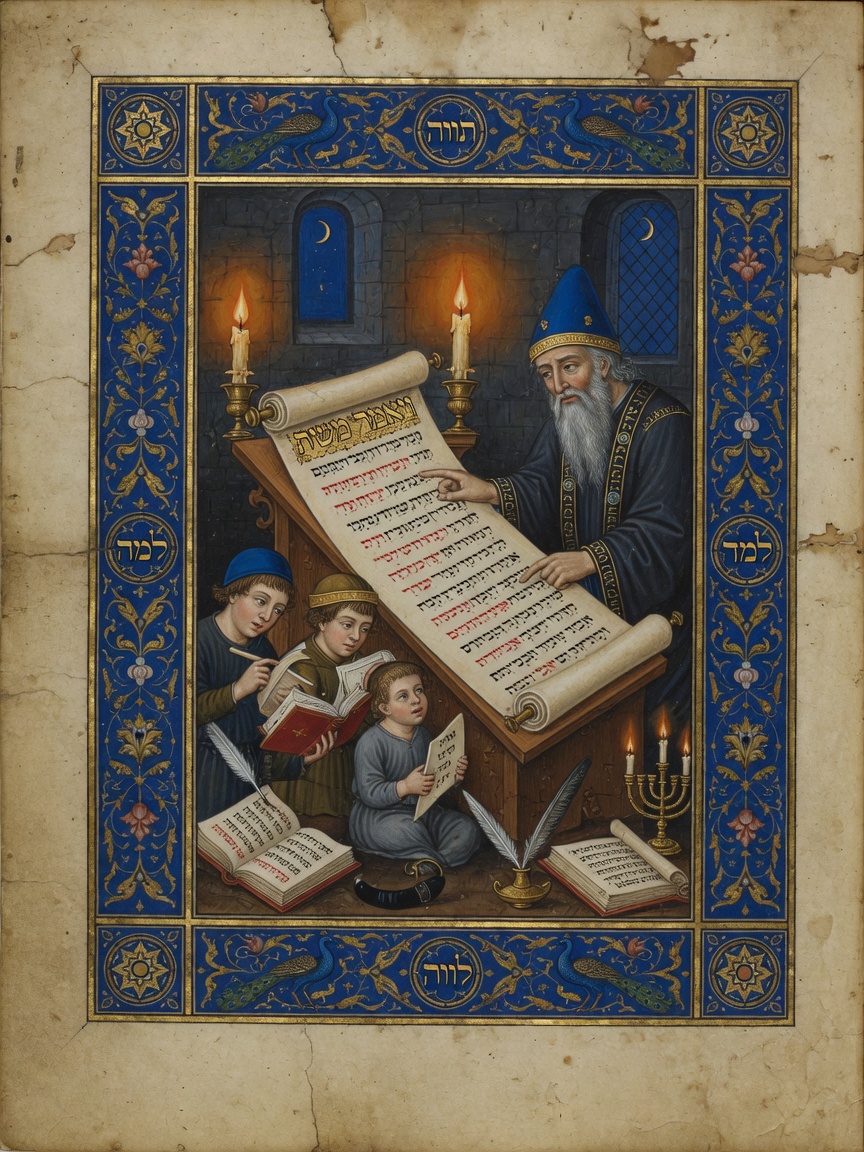
The cheder taught boys to read pointed Hebrew before they fully commanded Yiddish literacy; girls often learned Yiddish reading for practical letters and vernacular texts. Chava Turniansky has documented extensive Yiddish manuscript literature — memoirs, prayers, women's tkhines — proving that vernacular literacy was widespread, not marginal.
III. Literature: From Bove Bukh to Bashevis
Yiddish literary history spans:
- Old Yiddish (14th–18th c.) — epic romances like the Bove Bukh, moralizing adaptations of Hebrew sources
- Maskilic and Haskalah writing — satires, journalism, debates over modernization
- Classic trio — Sholem Aleichem, I. L. Peretz, Mendele Mokher Sforim
- Modernism and Holocaust literature — Isaac Bashevis Singer, poets of the Warsaw ghetto, postwar memorial culture
Biblical content permeated Yiddish — not only in translations but in idioms, curses, blessings, and the weekly tsenbeṭl that brought peshat and midrash to Yiddish-speaking audiences who heard the Hebrew portion chanted with te'amim on Shabbat.
IV. Dialect Geography
Major Eastern European dialects:
- Litvish (Northeastern) — basis of the YIVO standard; associated with Vilna yeshiva culture
- Poylish (Central) — Poland; vowel system distinct from Litvish
- Ukrainish (Southeastern) — richest Slavic component; Odessa literary scene
Dialect differences were a source of humor, pride, and occasional snobbery — but the Hebrew Bible read in synagogue was the same Masoretic text whether the congregation gossiped in Litvish or Poylish after services.
V. Catastrophe, Survival, Revival
The Holocaust murdered the majority of Yiddish speakers. Soviet policy treated Yiddish as a "national language" of Jews briefly, then suppressed it. Israel's early Zionists often stigmatized Yiddish as diaspora weakness. Yet Yiddish persists robustly in Hasidic communities (where children still learn Hebrew for prayer and Yiddish for home), in university programs, in translated canon, and in digital media. The YIVO archives preserve millions of documents — a civilization's record in the language its people actually spoke.
VI. Deeper Dives in the Yiddish Cluster
→ Yiddish hub page with full note cluster: