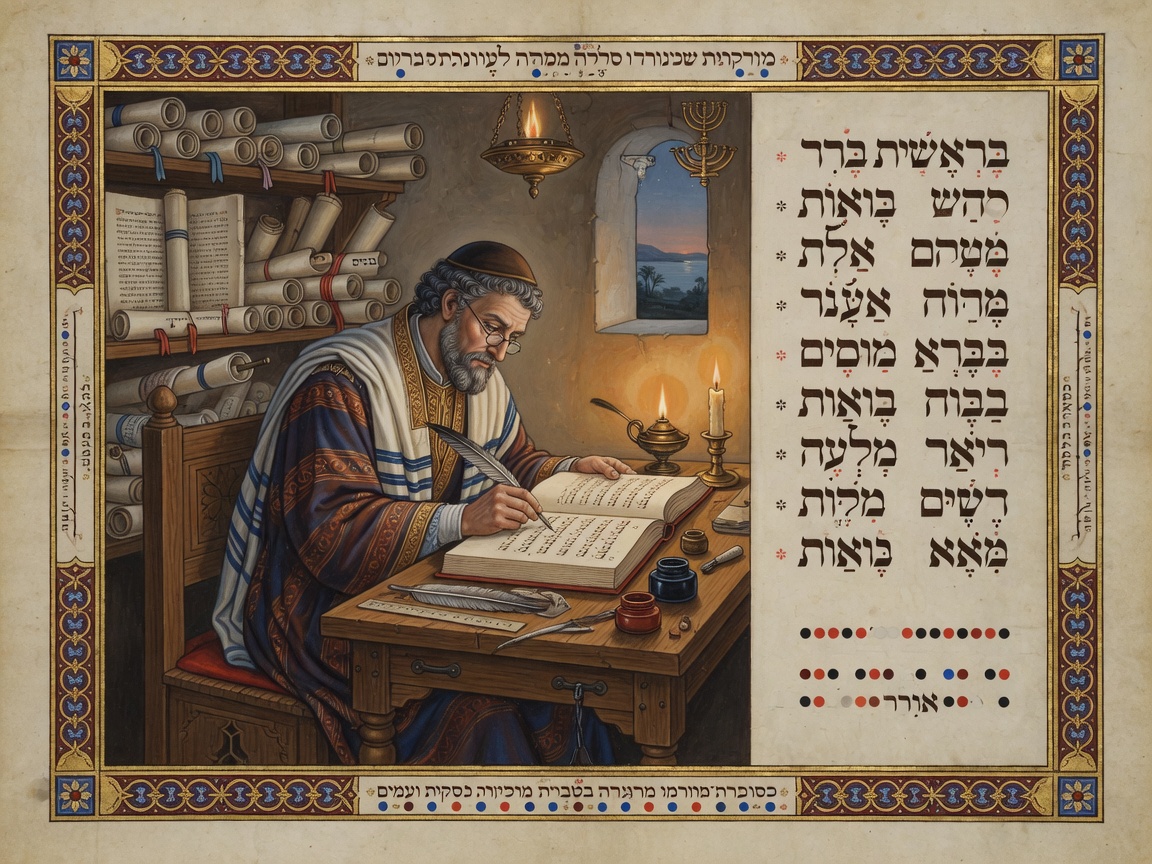
I. Yiddish: A Language Forged on the Road
Yiddish (ייִדיש, Yidish) began not in Poland but on the medieval Rhineland, where Jews arriving from Romance- and Hebrew-speaking lands encountered Middle High German and reshaped it into a Jewish vernacular. Over five centuries it traveled east, absorbing Slavic vocabulary and syntax until it became the mother tongue of roughly eleven million Jews on the eve of the Holocaust. → Yiddish hub (6 notes: dialects, literature, Bible, diglossia, revival)
Linguists debate Yiddish's ultimate origins — the "Rhine hypothesis" versus theories of Bavarian or Slavic birth — but all agree on its structure: a Germanic core, a heavy Hebrew-Aramaic stratum (loshn koydesh), and increasing Slavic influence as Ashkenaz expanded into Poland, Lithuania, and Ukraine. Max Weinreich's four-volume History of the Yiddish Language remains the monument of scholarship; YIVO in Vilna (now New York) standardized the literary dialect that still anchors Yiddish education today.
II. Dialects: Litvish, Poylish, Ukrainish, and More
Eastern European Yiddish was never one uniform speech. Major dialect groups included:
- Litvish (Northeastern) — Vilna, Kovno, Minsk; favored by yeshiva culture and modern standard Yiddish
- Poylish (Central) — Warsaw, Łódź; characteristic vowel shifts and Polish loanwords
- Ukrainish (Southeastern) — Odessa, Kiev; heavier Ukrainian influence, home of much Yiddish theater
- Transcarpathian and Balkan varieties — bridges to Central Europe and the Ottoman borderlands
Yet in every dialect, the diglossia held: a melamed taught boys to decode pointed Hebrew from a sidur or ḥumash, while mothers sang Yiddish lullabies and merchants kept accounts in Yiddish with Hebrew dates. Rashi's Hebrew-script French glosses on the Talmud — written centuries before Yiddish crystallized — already modeled the pattern: sacred text on top, vernacular explanation underneath.
III. Smaller Languages of the Eastern Jewish World
Turkic-speaking Karaites in Crimea and Lithuania used Karaim for Bible exegesis and daily life — a reminder that "Ashkenazi" and "Yiddish" do not exhaust Eastern European Jewish speech.
Czech (judeo-český) and other Slavic-influenced Jewish varieties existed alongside Yiddish; Slavic morphology penetrated Yiddish itself so deeply that eastern dialects are sometimes called "Slavic-colored German."
IV. Yiddish Literature and the Hebrew Connection
Yiddish was long considered a "kitchen language" unfit for serious literature — until the 16th-century Bove Bukh, the 19th-century classics of Sholem Aleichem and I. L. Peretz, and the modernist experiments of Isaac Bashevis Singer. Throughout, Hebrew remained the language of prayer, Talmud, and rabbinic correspondence. The Haskalah (Jewish Enlightenment) debated whether to elevate Yiddish, reform Hebrew, or adopt European languages — a triangulation that shaped modern Jewish culture.
For biblical scholarship specifically, Yiddish tsenbeṭlakh (weekly Torah leaflets) and Mikraot Gedolot commentaries in Hebrew with Yiddish marginalia brought the Masoretic Text to mass audiences. → Bible scholarship in Eastern Europe
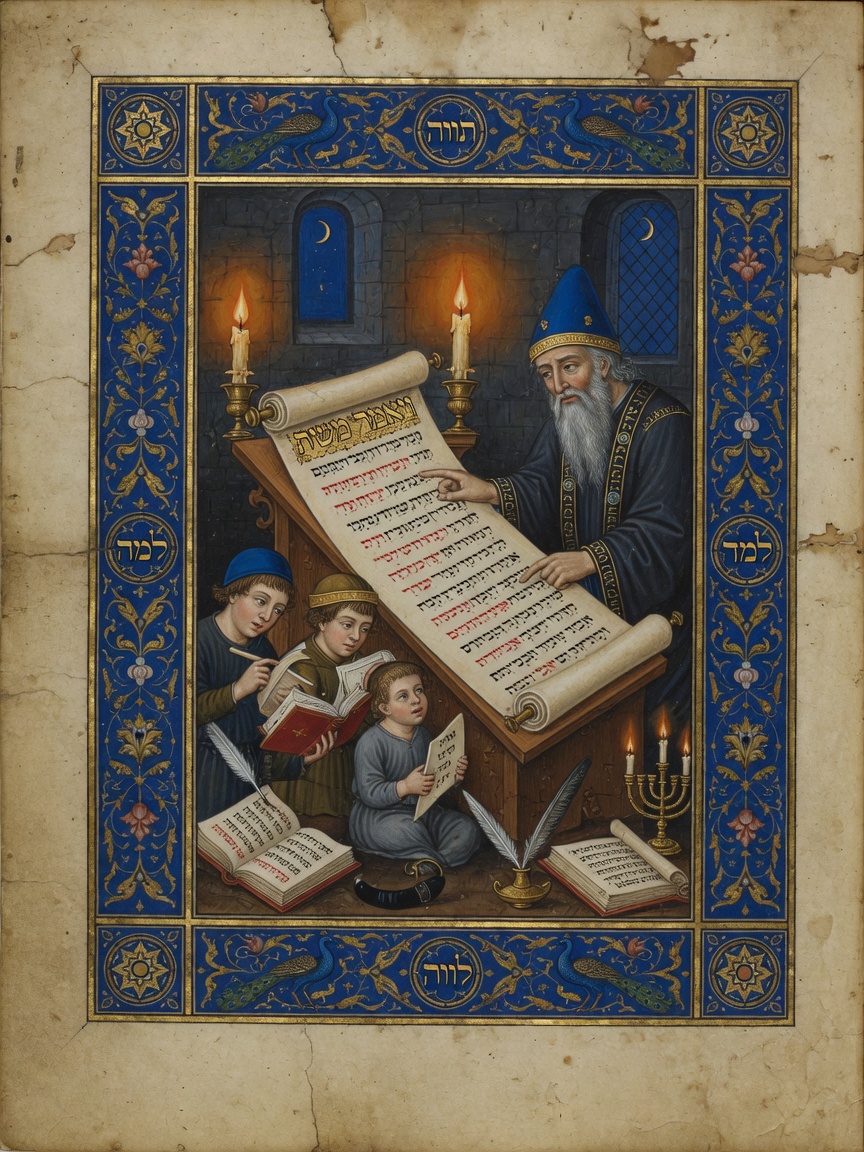
V. Catastrophe and Revival
The Holocaust destroyed the heartland of Yiddish speech. Soviet suppression, Israeli Hebrew revival, and American assimilation further reduced daily use. Yet Yiddish endures: in Hasidic communities where it remains a first language for hundreds of thousands; in academic programs and the YIVO archives; in theater, translation, and digital media. Hebrew, meanwhile, was revived as Modern Hebrew (Ivrit) — a development Ashkenazi migrants drove, building on the same Masoretic literacy the cheder had maintained for centuries.
VI. Historical Timeline
Old Yiddish emerges on the Rhine; Hebrew remains language of law and liturgy; Rashi's vernacular glosses
Eastward migration to Poland-Lithuania; Slavic absorption; first Yiddish printed books
Mass literacy in Hebrew and Yiddish; Vilna Gaon; Hasidism; Haskalah debates
Holocaust, emigration, Hebrew revival in Israel, Yiddishist cultural institutions, Hasidic demographic resurgence